
Clark Lea's Leadership Playbook
September 8, 2026
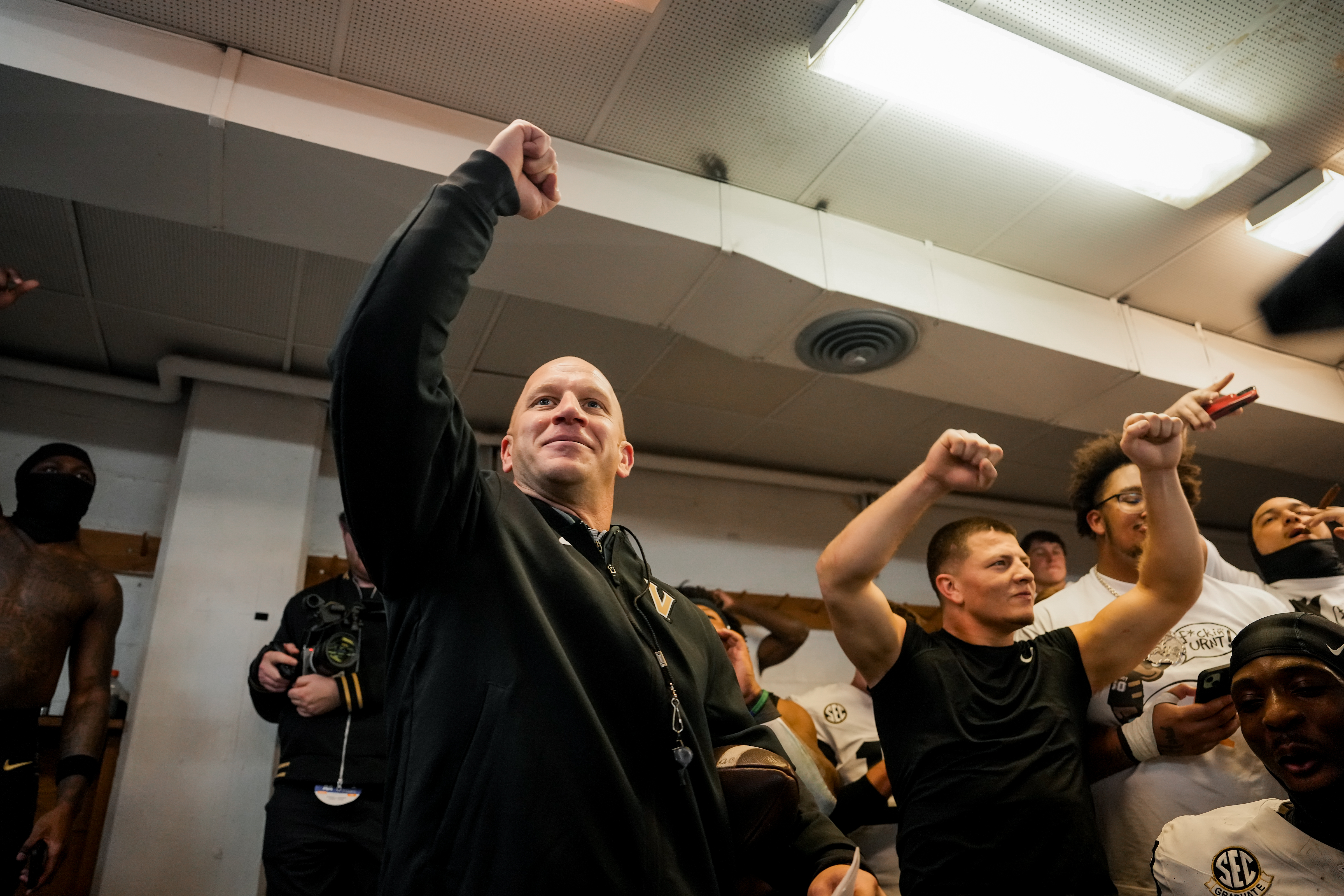
How the Vanderbilt head coach built belief in a broken program – and what every leader can learn from it
College football season is FINALLY back.
And with it, we get one of the most remarkable leadership stories in sports right now: the turnaround at Vanderbilt football.
Last year, Vanderbilt had its first 10-win season in program history. But when Clark Lea took the head coaching job back in 2021, they were winless.
I sat down with Clark recently on How Leaders Lead, and I have to tell you – this conversation stopped me in my tracks. Yes, it’s about football. But really, it’s about what it takes to rebuild belief in a broken organization, and the specific leadership behaviors that make big change possible.
Here are three lessons from Clark’s playbook that every leader needs to hear.
1. The leader has to change first
Key quote: “I didn’t realize how much I was going to have to change in order for this place to be successful.”

Clark arrived at Vanderbilt with vision, energy, and maybe a little bit of a savior complex.
As the defensive coordinator at Notre Dame, he’d notched two playoff appearances and multiple ten-win seasons.
In that role, he could solve problems himself. It was just a matter of working harder to fix what wasn’t working.
But that approach wouldn’t fly when he took the top job at Vanderbilt.
As he told me: “As a head coach, you realize that you become the least important person in the building.” He couldn’t just grind harder to execute better. He needed to create clarity, intent, and alignment – and then trust the people around him to execute.
That shift – from doer to enabler – is one of the hardest transitions any leader makes. Clark had the humility to recognize not just that the shift was important, but also that it was time for him to make it.
The takeaway: What you’re used to doing may not be what your team needs. If you want to lead lasting transformation, you need the humility to assess where you can be most effective and the ability to recognize when you need to change.
Reflect: What does your team need you to do (or stop doing!) in order to lead well?
2. Belief is a practice
Key quote: “How many people are willing to speak their dreams or their goals, but they’re not really willing to do the work?”

There’s a phrase you’ll hear often around the Vandy locker room: “Belief is a practice.” But Clark didn’t coin it. He borrowed it from the rapper Common, who spoke to a student group on campus early in Clark’s tenure.
Common was describing his early career: years of selling CDs out of the trunk of his car and performing anywhere and everywhere he could. He kept showing up. Doing the work was how he proved to himself that he believed success was possible.
That idea landed hard for Clark. He was coaching players who could talk a big game about going to the NFL and winning championships. But then they’d turn around and make choices that contradicted those dreams.
For him, belief isn’t an emotion you experience or a dream you have. It’s your willingness to show up and do the work. That’s how he built a winning team: not by talking about winning, but by expecting his team to work like winning was what they believed in.
The takeaway: Belief doesn’t just show up in speeches and emotions. It shows up in behaviors. What you expect, recognize, and reinforce every single day builds it. And it reveals what you and your team really believe in.
Reflect: If someone watched how you and your team spent your time this week, what would they conclude about what you believe in?
3. Aim for impact, not just compliance
Key quote: “The goal is not to get people to do what I say. It’s for them to do it for themselves.”

Some leaders just want their team to follow the rules.
But Clark wants his guys to internalize the mission so deeply that they’d uphold those rules whether he was in the room or not.
That’s a much harder thing to come by than simple compliance, but Clark tells a story that gives us tremendous insight into how he does it. And it involves a literal flaming garbage can.
Early in his first season as head coach, Clark gathered the team on the field at night. Instead of handing them a list of values, he asked them to identify something they thought was holding the program back. Everyone wrote down an answer, then burned it right there on the field.
Then they all wrote down what they were willing to change. A few key players took those responses and came up with five covenants for the program – values they wanted to work and play by. That part’s important: the players did it. Clark knew that if these standards were going to make an impact, they needed to come from the team, not from the coach.
But ownership alone isn’t enough. Relationships are just as important. As Clark told me: “We can’t put rules up on the wall and have slogans and not have relationships. How we drive impact is actually getting to know the people.”
That means investing in his players and staff as human beings, understanding who they are outside of football, and letting them see who he is outside of coaching. The relationships are what give the covenants real meaning.
The takeaway: The best work environments grow when teams move beyond simple compliance and genuinely develop ownership over the standards and the mission. As I like to say, if there’s no involvement, there’s no commitment. So take time to involve your team in that work, and get to know them as you do.
Reflect: When was the last time you gave your team real ownership in developing something important?
—
I love a good turnaround story, and what Clark Lea is doing at Vanderbilt is a special one.
Here’s why it’s working:
Clark clearly believes that real change always starts from within – with the leader, with the team’s belief, with genuine ownership over the mission.
That inside-out approach is a powerful insight worth studying, whether you’re coaching football or leading a team.
And that’s just the beginning. There’s so much more to learn from Clark in our full conversation – including what happened in year three, when the program appeared to take a significant step back and Clark had to dig deeper than he ever had before.
Watch the full conversation on YouTube or listen wherever you get your podcasts.
Which of these three lessons resonates most with you? Drop a comment and let me know – and be sure to tell me who YOU think will win the national championship this year!